WONGLING
ABOUT
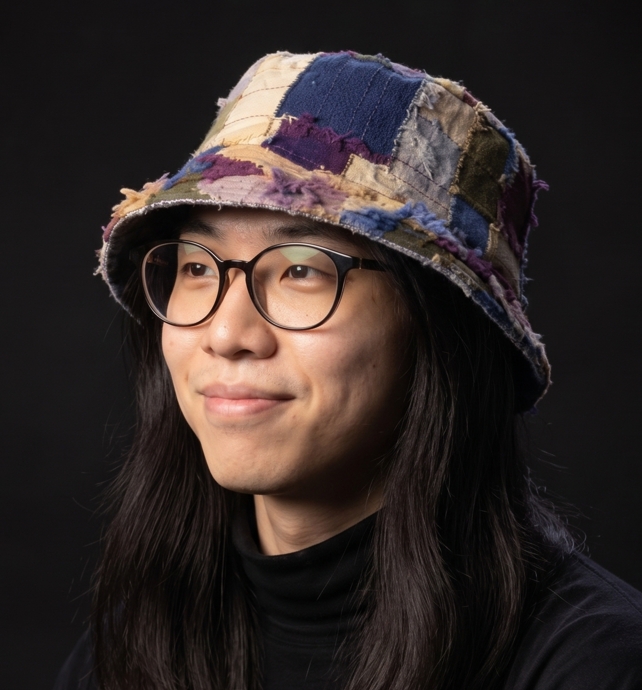
WONGLING is a Taiwan-based independent researcher in parapsychology and an investigator of unexplained phenomena. His work focuses on parapsychology, anomalous and exceptional experiences, consciousness, religion and spirituality, as well as human experiences and events that remain insufficiently explained.
Since 2010, he has been collecting, observing, and documenting cases involving paranormal phenomena, unexplained events, religious experiences, and other anomalous or mysterious reports. Drawing on approaches from religious studies—including the analysis of religious phenomena, cultural-contextual comparison, and qualitative research—he has gradually developed his own approach to the study of anomalous experiences and unexplained phenomena.
He currently advocates the use of Unexplained Phenomena as a comparatively neutral research framework for events and experiences that cannot yet be adequately explained.
This approach does not presuppose supernatural causes, nor does it assume that anomalous events can be attributed to any single factor.
Research therefore prioritizes the preservation of primary records and distinguishes between observation, experience, interpretation, and inference. Possible explanations are examined in relation to sensory perception, memory, psychological state, environmental conditions, cultural background, personal context, instrumental data, and other relevant factors.
RESEARCH APPROACH
The research primarily follows an interdisciplinary and exploratory approach. Depending on the question being examined, methods and sources may include:
- Literature review and research synthesis
- Case documentation and analysis
- First-person narratives and experiential records
- Qualitative interviews
- Field observation
- Analysis of reported phenomena
- Cross-cultural comparison
- Classification of anomalous experiences
- Comparison of multiple explanatory models
- Experimental work, documentation, and data analysis where feasible
When examining cases involving paranormal, religious, spiritual, or anomalous experiences, four analytical levels are distinguished:
EVENT
Events and circumstances recorded, observed, or reported in the course of research.
EXPERIENCE
What an experiencer reports having perceived, sensed, seen, heard, or undergone.
INTERPRETATION
How an experience is understood by the experiencer, a cultural context, a religious tradition, or a researcher.
HYPOTHESIS
An explanatory model proposed to account for an event or experience and which remains subject to further examination and testing.
This distinction is intended to avoid equating personal experience directly with objective fact, as well as to avoid classifying an event as supernatural simply because it is not currently explained.
At the same time, the research remains open to different explanatory frameworks and relevant forms of evidence, while distinguishing among them according to source, evidential quality, and methodological limitations.
RESEARCH AREAS
Parapsychology & Unexplained Phenomena
Research concerning established topics within parapsychology as well as anomalous events and experiences that currently resist adequate classification or explanation.
Consciousness & Altered States
Research into unusual or altered experiences of consciousness that may occur under different physiological, psychological, and cultural conditions, with particular attention to how such experiences are perceived, remembered, and interpreted.
Religion, Spirituality & Cultural Phenomena
Research into how different societies and traditions describe, classify, interpret, and engage with experiences commonly associated with supernatural or extraordinary phenomena.
Sound, Soundscape & Consciousness
Practical and exploratory work concerning sound, rhythm, soundscape, bodily perception, and subjective states of consciousness.
ORIGINAL RESEARCH FRAMEWORKS
The following are working hypotheses, conceptual models, and exploratory research frameworks developed through case analysis and independent research.
Their purpose is to transform recurring questions found across different cases into models that can be described, compared, criticized, revised, and—where conditions allow—further tested.
Consciousness Dimensions Hypothesis
The Consciousness Dimensions Hypothesis is an exploratory model that examines possible relationships among individual consciousness, information linkage, and different forms of conscious experience.
It is intended as a framework for describing and comparing phenomena associated with mediumship, religious experience, anomalous perception, and other transpersonal experiences.
At present, it remains a conceptual and exploratory hypothesis requiring clearer operational definitions, falsifiable propositions, and appropriate methods of testing.
Gray Realm
The Gray Realm is a working concept developed through the long-term examination of narratives concerning near-death experiences, out-of-body experiences, and related altered or exceptional states, together with personal experience.
The term is provisionally used to describe reports of a transitional spatial experience situated between ordinary bodily perception and other forms of exceptional conscious experience.
Other concepts currently under development include 光脈 and 寧息.
ACADEMIC BACKGROUND
During his university years, WONGLING studied in the Department of Religious Studies at Fu Jen Catholic University, where his studies included comparative religion, psychology of religion, sociology of religion, religious phenomena, and related research methods.
His subsequent research has continued through independent study, literature review, case collection, field observation, and research practice.
RESEARCH & ORGANIZATIONAL EXPERIENCE
TAPARA Research Center
Convener
臺灣靈異研究學會
Researcher and Inaugural President
福爾摩沙超自然事件調查小組
Team Lead
Related work has included research-community development, case discussion, documentation, public communication, field observation, and public engagement with topics concerning paranormal and unexplained phenomena.
For research exchange, collaboration, or other inquiries, please visit the Contact page. CONTACT →